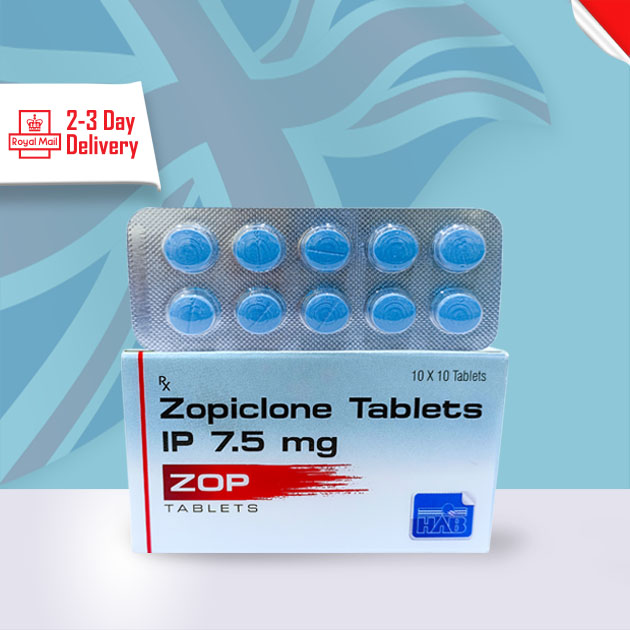
Zopiclone is a non-benzodiazepine hypnotic agent belonging to the cyclopyrrolone class, commonly referred to in the UK as a "Z-drug". It is licensed for the short-term treatment of insomnia in adults, including difficulties falling asleep, frequent nocturnal awakenings, early morning awakening, and insomnia secondary to psychiatric disturbances when the condition is debilitating or causing severe distress.
Unlike benzodiazepines, Zopiclone acts selectively on GABA-A receptors in the brain to promote sleep without significantly disrupting normal sleep architecture—preserving both REM and slow-wave sleep.
Zopiclone enhances the activity of gamma-aminobutyric acid (GABA), the brain's primary inhibitory neurotransmitter. By binding to specific GABA-A receptor sites, it increases chloride ion channel opening, which slows neuronal activity and produces a calming, sedative effect.
This mechanism helps:
Zopiclone typically begins working within 30 to 60 minutes of ingestion, with peak plasma concentrations reached in 1.5–2 hours.
Zopiclone 7.5mg film-coated tablets are indicated in the UK for:
It is not intended for long-term or chronic use. Treatment should employ the lowest effective dose for the shortest possible duration, typically not exceeding 4 weeks including any tapering period.
Extension beyond 4 weeks requires clinical re-evaluation.
To maximise effectiveness and minimise risks:
When used appropriately under medical supervision, Zopiclone offers several clinically proven benefits:
Like all medicines, Zopiclone can cause side effects, though not everyone experiences them.
If you experience unusual behaviours (e.g., sleep-driving), memory gaps, or mood changes, discontinue use and contact your doctor immediately.
Zopiclone is contraindicated in patients with:
Use with caution in patients with depression, history of substance misuse, personality disorders, or mild-to-moderate liver/kidney/respiratory impairment.
Zopiclone may interact with several medicines. Always inform your doctor or pharmacist about all medications you're taking.
Zopiclone 7.5mg is a Prescription-Only Medicine (POM) in the UK. It must only be taken under the supervision of a qualified healthcare professional. Never share your medication with others, and always store it securely.
For best results, combine Zopiclone with good sleep hygiene practices:
If insomnia persists beyond 4 weeks, consult your GP to explore underlying causes and alternative treatments.
This information is for educational purposes only and does not constitute medical advice. Always consult a UK-registered doctor or pharmacist before starting, stopping, or changing any medication.
Most people feel sleepy within 30 to 60 minutes of taking the tablet. Peak effect occurs around 1.5–2 hours after ingestion.
No. Zopiclone is licensed for short-term use only (typically 2 days to 4 weeks maximum). Long-term use increases risks of tolerance, dependence, and withdrawal.
Do not take it later in the night or double the dose. Skip the missed dose and take your next tablet at the usual time the following night.
No. You must not drive or operate machinery for at least 12 hours after taking Zopiclone due to residual sedation and impaired psychomotor function.
Yes, it carries a moderate risk of dependence, especially with prolonged use (>4 weeks), high doses, or in individuals with a history of substance misuse. Always follow your prescriber's tapering plan when stopping.
Abrupt discontinuation after regular use may cause withdrawal symptoms including rebound insomnia, anxiety, tremors, sweating, and in rare cases, seizures. Taper gradually under medical supervision.
No. Alcohol significantly increases sedation, respiratory depression, and the risk of dangerous behaviours like sleep-driving. Avoid completely during treatment.
Yes. Imovane and Zimovane are brand names for Zopiclone in the UK. Generic Zopiclone 7.5mg contains the same active ingredient and is equally effective.
Yes, but taking it on an empty stomach may lead to faster absorption and quicker onset of action. Avoid heavy or fatty meals close to bedtime.
Stop taking Zopiclone immediately and contact your doctor. These are rare but serious side effects that require medical evaluation.
.svg)
Delivered in secure, plain packaging on fully tracked delivery from just £10.

Our team of doctors and pharmacists, and our support staff, are all UK-based.
.svg)
Have a question? Telephone support is always free; Monday - Friday, 9am - 5pm.