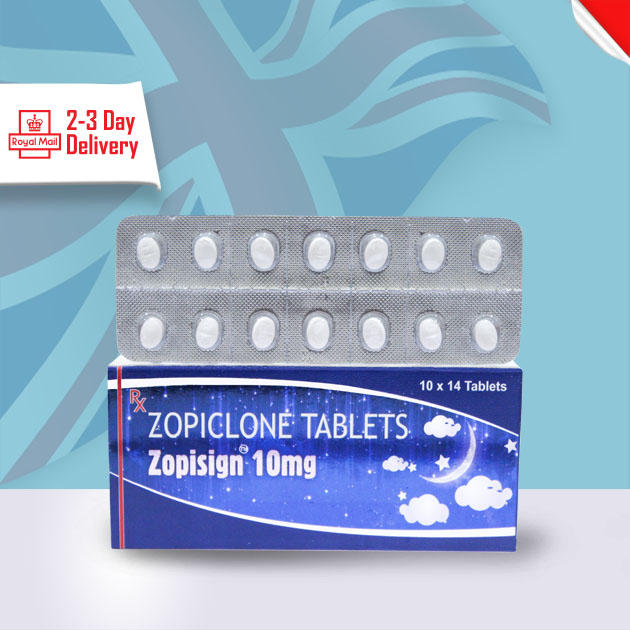
Zopiclone is a prescription-only sleeping tablet used for the short-term treatment of insomnia in adults. It belongs to a group of medicines commonly called "Z-drugs" — a class that also includes zolpidem and zaleplon. Chemically, zopiclone is a cyclopyrrolone, which makes it structurally different from benzodiazepines such as diazepam or temazepam, even though the two groups act on the same receptor system and share many of the same risks.
In the United Kingdom, zopiclone is:
It is intended as a short, time-limited intervention — not as an ongoing treatment for chronic sleep problems. NICE guidance positions cognitive behavioural therapy for insomnia (CBT-I) as the first-line treatment for persistent insomnia, with hypnotic medicines reserved for severe, disabling episodes where the person is in significant distress.
Zopiclone acts on the central nervous system by enhancing the effect of gamma-aminobutyric acid (GABA), the brain's principal inhibitory neurotransmitter.
The mechanism, step by step:
The net effect is a broad damping of neuronal excitability, which produces sedation and shortens the time it takes to fall asleep.
Pharmacokinetics in brief: zopiclone is absorbed rapidly, with peak plasma concentrations at roughly 1.5–2 hours. Its elimination half-life is around 5 hours in healthy adults, but this extends considerably — to 7 hours or more — in older people and in those with liver impairment. That extended half-life is precisely why the recommended dose is lower in those groups: the drug is still circulating when the person wakes.
Zopiclone is metabolised primarily by the liver via the CYP3A4 enzyme system, which is the source of most of its clinically important drug interactions.
Zopiclone is licensed in the UK for the short-term treatment of insomnia in adults, specifically where the insomnia is severe, disabling, or subjecting the person to extreme distress.
Clinical situations where a prescriber may consider it:
Zopiclone is not appropriate for:
Dosing must always be set by your prescriber. The figures below reflect the BNF and UK product licences, but your doctor's specific instructions take priority.
|
Usual dose |
7.5mg, taken once at bedtime |
|
Maximum dose |
7.5mg in any 24-hour period |
|
Doses per night |
One only — never a second dose after a night-time awakening |
The recommended dose is 3.75mg at bedtime. Older adults clear zopiclone more slowly and are considerably more sensitive to its sedative effects. The 3.75mg dose reflects a well-documented increase in the risk of confusion, unsteadiness, falls and hip fracture in this group.
3.75mg is the recommended starting dose, because reduced liver metabolism raises plasma levels and prolongs the drug's effect. Zopiclone should be avoided altogether in severe hepatic impairment.
A starting dose of 3.75mg is advised. Although zopiclone is cleared mainly by the liver, accumulation is possible and caution is warranted.
Duration of treatment
Treatment should be as short as possible — generally two to four weeks maximum, including any tapering period. Where possible, intermittent dosing (for example, two or three nights per week rather than every night) reduces the development of tolerance and dependence.
There is no licensed strength above 7.5mg in the UK. If 7.5mg is not producing adequate benefit, the correct response is to return to your prescriber for reassessment — not to take additional tablets. Ineffectiveness usually signals either tolerance or an undiagnosed underlying cause, and neither is solved by a larger dose.
Before you start
Tell your prescriber if you have, or have ever had:
Also give a complete list of every medicine, supplement and herbal remedy you take.
Things to avoid
Alcohol. This is the single most important precaution. Alcohol and zopiclone are both CNS depressants and their effects compound each other, producing profound sedation, respiratory depression, blackouts and a substantially raised risk of accidental injury.
Other sedating medicines. Opioid painkillers, benzodiazepines, sedating antihistamines, gabapentinoids, some antidepressants and antipsychotics, and herbal sedatives such as valerian all add to zopiclone's effects. The combination with opioids is particularly dangerous.
Grapefruit juice, which inhibits CYP3A4 and can raise zopiclone levels.
This deserves particular attention in the UK. Under Section 5A of the Road Traffic Act 1988, zopiclone is a specified controlled drug with a statutory blood concentration limit. Driving with zopiclone above that limit is an offence in its own right, entirely separate from whether you appear impaired.
There is a statutory medical defence if the drug was prescribed to you, you took it in accordance with instructions, and your driving was not actually impaired — but you must be able to demonstrate all three. Keeping the medicine in its original labelled packaging is sensible.
In practice: if you feel drowsy, foggy, dizzy or slow the next morning, do not drive. Next-day impairment is real and measurable, and it is often worse than the person subjectively realises.
Store below 25°C in the original packaging, away from moisture and light. Keep it securely out of reach of children and anyone else — zopiclone has street value and sharing it is a criminal offence. Return unused tablets to a pharmacy for disposal.
Used correctly and for a limited period, zopiclone offers genuine advantages:
A realistic framing matters here. Zopiclone treats the symptom, not the cause, and its benefits do not persist after it is stopped. The evidence base shows CBT-I produces more durable improvement in chronic insomnia than any hypnotic, with effects that continue long after the course ends. Zopiclone works best as a short bridge while the underlying problem is addressed — not as the treatment itself.
Common
Complex sleep behaviours. The MHRA has issued specific warnings about sleepwalking, sleep-driving, sleep-eating and other activities carried out while not fully awake, with no memory of them afterwards. These events can be fatal. The risk is raised by alcohol and by other sedatives. If this happens even once, stop the medicine and contact your prescriber immediately.
Dependence and tolerance. Physical and psychological dependence can develop within weeks. Warning signs include needing the tablet to feel able to sleep at all, anxiety at the thought of running out, or finding the usual dose no longer works.
Withdrawal and rebound insomnia. Stopping abruptly after regular use can cause anxiety, tremor, sweating, palpitations, irritability and — in severe cases — confusion or seizures. Rebound insomnia, where sleep is temporarily worse than before treatment started, is common and frequently misread as proof the drug is still needed.
Respiratory depression, particularly in people with existing lung disease or when combined with opioids or alcohol.
Increase sedation (additive CNS depression): opioids, benzodiazepines, barbiturates, sedating antihistamines, gabapentin and pregabalin, some antidepressants and antipsychotics, muscle relaxants, alcohol.
Raise zopiclone levels (CYP3A4 inhibitors): clarithromycin and erythromycin, ketoconazole and itraconazole, ritonavir and other protease inhibitors, grapefruit juice.
Reduce zopiclone levels (CYP3A4 inducers): rifampicin, carbamazepine, phenytoin, phenobarbital, St John's wort.
Use with particular caution in anyone with a history of substance misuse, and in those with depression, where hypnotics may unmask or worsen suicidal ideation.
Never stop abruptly after regular use. Your prescriber will normally:
Expect a few poor nights. Rebound insomnia is temporary and settles — it is not evidence that the medicine is still required.
No. Zopiclone is licensed in the UK only as 3.75mg and 7.5mg tablets, and the maximum adult dose is 7.5mg at bedtime. Any website offering "zopiclone 10mg" is supplying outside UK regulation, and the product's actual identity, strength and purity cannot be relied upon. If 7.5mg isn't working for you, speak to your prescriber rather than seeking a higher dose.
Most people feel drowsy within 30–60 minutes. Take it only once you are ready to get into bed and can allow 7–8 hours of sleep.
No. It is licensed for short-term use — usually no more than two to four weeks including tapering. Where possible, intermittent use of two or three nights a week reduces the risk of tolerance and dependence.
3.75mg. Older adults metabolise zopiclone more slowly and face a markedly higher risk of confusion, unsteadiness and falls. The lower dose is a deliberate safety measure, not an under-treatment.
No. The combination causes dangerous sedation and respiratory depression, and substantially raises the risk of complex sleep behaviours and accidents.
No. Never take more than one dose in 24 hours. A second dose late in the night guarantees significant next-day impairment and raises the risk of complex sleep behaviours.
Only if you feel completely alert. Zopiclone is a specified drug under Section 5A of the Road Traffic Act 1988, with a legal blood limit. A medical defence exists if it was prescribed to you, taken as directed, and your driving was unimpaired — but if you feel at all foggy or slow, do not drive.
It is possible, and the risk rises with nightly use, longer duration, and any history of substance misuse. Using the lowest effective dose for the shortest time, with intermittent dosing where feasible, substantially reduces the risk.
It is the drug's best-known side effect, caused by zopiclone and its metabolites being excreted in saliva. It is harmless but can be persistent. If it is severe enough to affect your appetite, tell your prescriber.
Do not increase the dose. Loss of effect usually means tolerance has developed, or that something underlying is driving the insomnia. Ask your prescriber about screening for sleep apnoea, pain, depression, anxiety or thyroid problems, and about starting CBT-I.
Skip it. Take the next dose at the usual bedtime. Never double up.
Only from a GPhC-registered pharmacy, and only with a valid prescription. Zopiclone is a Class C controlled drug; buying it without a prescription is illegal, and unregulated online suppliers frequently sell counterfeit products of unknown strength and composition.
.svg)
Delivered in secure, plain packaging on fully tracked delivery from just £10.

Our team of doctors and pharmacists, and our support staff, are all UK-based.
.svg)
Have a question? Telephone support is always free; Monday - Friday, 9am - 5pm.